I’m Khushali Bhatt and This is My Space.
I'm a
Content Strategist.
Custom Freelance Services Specialist.
Technical Writer.
Web Copy Specialist.
SEO Writer.
Marketing Writer.
Copywriter.
I’m a content writer who knows how to hook people and keep them reading. I don’t just throw words on the page- I dig into what really matters for every topic and turn it into something people want to share. Blog posts, product descriptions, press releases- you name it, I make sure every piece does more than just take up space. It informs, entertains, and actually gets results.
I move fast and always aim for top quality. On top of that, I get SEO and know how to shape content so it actually reaches people and helps businesses grow.
Need content that actually grabs attention and gets your brand noticed? Let’s chat. I’m here to turn your ideas into stories that stick.
Content Development Expertise
What I Bring to the Table
Blog Posts
When you write with energy and a relaxed tone, your brand feels more relatable. People start to trust you. That’s the sweet spot- using smart, engaging content to shape your marketing and connect with new clients.
Article Writing
Give your clients and subscribers real insights- stuff they can actually use. Go deep on big topics and watch your website climb in the search results. When you offer value, you don’t just bring in traffic; you turn visitors into leads, and leads into loyal followers.
Product Descriptions
Don’t just list features. Show off what makes your products special. Good descriptions help buyers picture themselves using what you offer, and that’s what gets them to click “buy.” More sales, more growth- simple as that.
Infographics Content
Take complicated info and make it pop. Use sharp visuals- charts, images, maybe a quick video to get your point across fast. The right design turns tough data into something people actually want to read and share.
Guest Posts
Share your know-how on new platforms. Connect with industry leaders. When you guest post, you tap into new audiences and boost your brand’s reputation. Plus, it gives your website a nice authority bump.
Press Releases
Got news? Share it in a way that grabs attention. Use photos, videos, and a clear message to get people talking and boost your visibility online. A good press release helps the right people notice you.
Website Copies
Your website is your handshake. Strong, clear writing keeps people interested and gives a great first impression. Invest in content that’s easy to find, easy to read, and makes your business look sharp and credible.
Case Studies
Show, don’t just tell. Walk people through real stories of how your product or service made a difference. Highlight what your customers experienced and the results they got. That’s proof that works.
Brochure Content
Use your brochures to spark real interest, whether you’re gearing up for an event or just reaching out to new folks. With the right words and a friendly tone, you can make people curious about what you do- and why they should care.
A Decade of Professional Experience, Still Growing
My Career So Far
Job Experience
Sr. Content Writer & Copy Editor
Current Employment (March 2023 – Present)A highly skilled and adaptable content writer, delivering engaging, SEO-optimized content across diverse industries. As a dedicated full-time freelancer, I bring creativity, precision, and a results-driven approach to every project.
Technical Content Writer, (Remote Employee - Full Time)
Silicon IT Hub Pvt Ltd. – Ahmedabad(April 2021 – Feb 2023) The Fourth Employment
I managed the development, refinement, and proofreading of content to align with diverse marketing objectives, ensuring impactful service promotion.
Content Writer, Editor, Copy Writer
(Jan 2019 – March 2021)I worked as a full-time freelance content writer based in Gujarat, India, creating a wide range of content, including blog posts, articles, product descriptions, and website copy to enhance product and service visibility.
Content Editor, R&D, Copy Writer
Joshi Biztech Solutions Ltd. – Bhavnagar(Jan 2018 – Dec 2018) The Third Employment
I conducted observational studies on finance and trading processes to deepen my understanding of blockchain technology for a writing project.
Sr. Content Writer, Editor, Copy Writer
AgileInfoways Pvt. Ltd. – Ahmedabad(Oct 2015 – Oct 2016) The Second Employment
I was responsible for creating original content for various business websites across industries such as IT, Health & Fitness, Travel & Hospitality, and E-commerce. I also wrote technical articles covering CMS & CRM platforms, web and mobile app development, IT trends, management strategies, and software solutions.
Jr. Content Writer, R&D, Social Media Writeups
iMOBDEV Technologies Pvt. Ltd. – Ahmedabad(Oct 2015 – Oct 2016) The First Employment
I was responsible for writing, editing, and proofreading in-house marketing materials for internal use, ensuring clarity and effectiveness. My role involved extensive research and consistent content creation.
Academic Credentials
MCA – Master of Computer Applications
Gujarat Technological University (GTU)
BCA – Bachelor of Computer Applications
DharmSinh Desai University (DDU)
HSC – Higher Secondary School Certificate
Gujarat Higher Secondary Education Board (GHSEB)
Content Writing Skills
Concept Adaptability
Topic Research
Linguistic Accuracy
Content Originality
Clarity and Focus
Time Management
Client Communication
Logical Flow
Documentation
Various Other Skills
Stay Current & Open to Change
Understand the Target Audience
Know the basics of Good SEO
Be Social Media Savvy
HTML / CSS
WordPress Blogging
Collaboration
Content marketing
Seek Feedback & Learn from Others
Professional Endorsements
From Those I’ve Worked With
Billy Martin
Operating OfficerWeb App Development
via Facebook - Mar 2015 to Aug 2020She’s got a real knack for digging into research and shaping content that pops- plus, she knows exactly how to weave in SEO so people actually find and read it. She pays attention to every last detail, which means the stuff she delivers isn’t just accurate, but actually fits what we need. The work is always polished and stands out. Honestly, her commitment has made a huge difference for us. Thanks so much!
Milind Sanghvi
Marketing PersonnelWebsite Pages Content
via Facebook - Mar 2015 to Aug 2020Even with a crazy-tight deadline, she went all in and got every page done on time, without cutting corners. The quality never dropped. Her focus and determination really pushed this project beyond what we hoped for. Our client’s going to be thrilled. I can’t thank her enough for the value she’s brought here. Thank you!
Ritika Tikoo
Chief Content ManagerTechnical Content, Blogs and Articles
via Social Platforms - Feb 2025 to May 2025She picked up the main idea right away and used keywords in all the right spots, so everything was clear and effective. The content hits that sweet spot- original but totally on target, packed with keywords yet still easy and interesting to read. She doesn’t miss a beat when it comes to getting details right, and she always delivers fast, which kept things running smoothly.
Shishir Odedra
Tech LeadTravel Mobile App Design.
via Upwork Platform - Mar 2019 to Aug 2021Hey Khushaly, Just wanted to say thanks for all your help with the content. You’ve really raised the bar- my brand new website looks and feels so much stronger because of your work. I’m excited to see what the results will be. Your work has made a real difference, and I truly appreciate your time and skill. Thanks again!
Clients I’m Proud Of
Partners in Success
Professional Writing Showcase
Words I’ve Shared Recently
Why Rail Shipments Require AAR-Verified Dunnage Air Bags?
Rail shipments are tough on cargo, as long trips and rough tracks can shift cargo. Sudden stops make the risk of damage even higher. That is why railcar dunnage needs to be strong and reliable. It has to handle impact without failing. Dunnage air bags help keep goods in place—but not all air bags are the same.
AAR-verified options meet strict safety standards set by the Association of American Railroads. They are tested and approved by industry standards. Teams across the sector trust them to perform. If you are shipping by rail, using verified dunnage is not just smart—it is necessary.
In this blog, we will look at why rail shipments need AAR-verified Dunnage air bags—and what makes them different from standard options. No fluff. Just the facts that matter.
The Hidden Risks in Rail Freight
Why Rail Freight Is Unforgiving Without Proper Dunnage
According to GoRail’s Public Benefits of Freight Railroads report, U.S. freight railroads move roughly 40% of long-distance freight in the U.S.
But it is not a smooth ride. Cargo gets pushed sideways, forward, and back. These forces—called lateral and longitudinal loads—build up fast. If the railcar loading system or railroad loading is not solid, and the rail dunnage is not secure, things go wrong.
Here is what that looks like:
- Loads shift.
- Pallets tip.
- Packaging tears.
- Goods arrive broken—or do not arrive at all
And trains do not stop to fix mistakes. Once the railcar is sealed, it is gone. That is why cargo securement in freight rail is not just a checklist—it is a system. Every part matters. From blocking and bracing to Dunnage air bags, it all has to work together to handle the demands of railcar dynamics.
What Are Dunnage Air Bags & Why They Matter
Dunnage air bags are inflatable cushions used to fill gaps between cargo. They keep goods from shifting during transport. That is their job—simple and clear. They look simple, but they’re key to cargo protection and load securement.
In intermodal transport, freight moves across different modes. It travels by truck, train, and ship. Without support, cargo shifts or breaks.
These bags—also known as Dunnage Bags, shipping airbags, or cargo airbags—keep cargo from moving.
- They hold everything in place.
- They reduce damage.
- They make sure goods arrive the way they should.
To know more about the types of dunnage air bags, please read our detailed guide here.
Why AAR Verification Is Non-Negotiable
What Is AAR & What Does “Verified” Mean?
The Association of American Railroads (AAR) decides how cargo should be packed and secured in railcars. These rules are not optional—they are safety requirements. One of the key guidelines is AAR RP-4, which covers how these airbags must perform under pressure.
To be “AAR-verified,” a product must pass strict testing. That includes meeting the Open Top Loading Rules, which define how freight should be secured in open railcars. It also means complying with broader load securement standards used across the rail industry.
If a Dunnage bag is not AAR-verified, it may not hold up under real rail conditions. And that puts cargo—and compliance—at risk.
You can read more in the AAR Verification Overview.
How AAR-Verified Dunnage Air Bags Are Tested
To be used in rail freight, Dunnage air bags must pass strict tests. These tests follow the AAR RP-4 standard, which sets clear rules for safety and performance.
Here is what gets checked:
- Burst strength: Can the bag handle pressure without breaking?
- Inflation and deflation: Does it fill and release air properly?
- Temperature resistance: Can it handle hot or cold conditions?
These tests show what happens when a railcar is moving. Cargo shifts. Forces build. If the bag fails, the load is not secure.
That is why rail company dunnage teams use verified products. Whether it is airbags shipping across states or through intermodal transport, AAR verification means the bag can do its job.
Benefits of Using AAR-Approved Dunnage Bags
Protection, Compliance & Peace of Mind
AAR-approved bags are not just a checkbox—they are a safeguard. They are a reliable choice for railcar dunnage and shipping airbag applications.
Here is what they offer:
- Stops cargo from moving during railcar shifts and direction changes
- Follows safety rules to avoid fines and legal problems
- Reduces damage claims and lowers insurance costs
- Lightweight and easy to handle during loading and unloading
Verified bags perform better under pressure. They are built for the demands of freight rail—and they help protect your cargo and your budget.
Here is a simple table comparing AAR-verified bags with non-verified ones—based on how they perform and meet safety standards.
| Criteria | AAR-Verified | Non-Verified |
| Burst Strength | Tested to meet AAR RP-4 standards | May fail under rail pressure |
| Inflation/Deflation Control | Reliable, consistent air flow | Inconsistent, prone to leaks |
| Temperature Resistance | Withstands extreme heat and cold | Susceptible to cracking or softening |
| Compliance | Meets AAR and Open Top Loading Rules | Not approved for regulated rail use |
| Damage Prevention | Reduces cargo shifting and breakage | Higher risk of load movement and damage |
| Insurance & Claims | Helps lower damage claims and insurance costs | May increase liability and claim frequency |
| Ease of Use | Lightweight, fast to install | May require extra handling or adjustment |
| Rail Suitability | Designed for railcar dunnage and intermodal transport | Often built for road freight only |
How to Implement AAR-Verified Dunnage in Your Rail Shipments

Step-by-Step Railcar Loading with Dunnage Bags
Here is how railcar loading systems use rail dunnage to do that:
- Inspect voids: Look for empty spaces between pallets, rolls, or equipment. These gaps need to be filled.
- Select the correct bag level: Choose the right size and strength of air bag based on the cargo and railcar type.
- Inflate: Fill the bag so it fits tightly. Do not overfill—it should support the load, not press too hard.
- Secure: Make sure the bag stays in place and does not shift during movement.
- Verify: Check everything again. Confirm the setup meets safety standards before sealing the car.
This process helps prevent damage and reduce claims. It keeps cargo stable through every mile.
To know more about how Dunnage Bags Prevent Load Shifting and Cargo Damage in Transit, please visit our blog here.
Choosing the Right Dunnage Partner
What to Check Before You Commit
Not every supplier builds for rail. If you are shipping by train, you need someone who understands the risks—and meets the standards.
Here is a simple checklist:
- AAR certification: Their airbags should meet AAR RP-4 standards. No exceptions.
- Bag levels (1–5:) They should offer different strength levels based on your cargo and railcar type.
- Material specs: Look for strong, puncture-resistant materials that hold up in heat, cold, and pressure.
A good partner will not just sell you bags. They will help you load smarter and avoid costly mistakes.
To Sum Up
Rail freight moves quickly and doesn’t allow for errors. Once the railcar is sealed, you can not fix anything. That is why securing cargo matters—it is what keeps it safe.
AAR-verified Dunnage air bags help prevent damage and meet safety standards. They keep shipments stable and moving as planned. If you handle loading, safety checks, or damage claims, picking the right dunnage matters. It protects your cargo, your costs, and your brand name.
About Dunnage Systems
Dunnage Systems Inc. builds air bags that work. We have been doing it for over 30 years. Our products meet AAR standards and are designed for real-world freight—whether it is moving by truck, train, or container. We offer different bag levels, eco-friendly options, and support that is actually useful. If you are looking for a supplier who understands rail freight, our services are worth a look.
Source: https://dunnagesystems.com/why-rail-shipments-require-aar-verified-dunnage-air-bags/
What are Architectural BIM Services? Benefits, Workflow, and Industry Impact
Architecture and construction move quickly. Teams need to work together to decide quickly and prevent mistakes. But many still use 2D drawings to plan buildings, and that makes the process slower. That is like using a paper map in a city where everyone else has GPS. This is where Architectural BIM Services come in.
Architectural BIM Modeling Services offer a better way. Instead of separate files and scattered updates, BIM brings everything into one model. It shows the building in 3D and includes important details—materials, measurements, timelines, and more. Everyone sees the same thing. Changes are updated in real time. Problems get spotted early.
In this blog, we will explore what Architectural BIM Services are, how they work, the benefits they offer, and their impact on the industry.
It is not just about saving time. It is about working smarter. BIM helps teams stay aligned, reduce errors, and deliver better results. And in today’s industry, that is not a bonus—it is the baseline.
Why Architectural BIM Is No Longer Optional
The Shift from 2D to Intelligent 3D Modeling
Many architecture teams still plan buildings using 2D drawings. These are fixed and don’t link well with other parts of the project. They do not show how systems interact. They do not catch problems early. And they do not support real collaboration.
Architectural BIM Services solve that. BIM stands for Building Information Modeling. It replaces 2D drawings with a smart 3D model. This model includes geometry, materials, timelines, and other data. It acts like a digital twin of the building—one that updates as the project moves forward.
This shift is not just about better visuals. It is about working with real information, in real time. Everyone—architects, engineers, contractors—sees the same model. They can spot clashes and track changes to make decisions faster.
And in the AEC industry, it is not just theory. A recent ArchAdemia report found that over 70% of architecture firms saw better results after switching to BIM. That includes fewer errors, faster approvals, and smoother handovers.
To learn more about the different modeling techniques used in architecture, check out our guide on What Types of 3D Modeling Are Used in Architecture?
Here is a clear table comparing 2D vs BIM workflows
| Aspect | 2D Workflows | BIM Workflows |
| Coordination | Limited collaboration across teams | Real-time coordination among stakeholders |
| Data Handling | Static drawings with minimal metadata | Rich, integrated data within 3D models |
| Error Detection | Issues are often found late during construction | Early clash detection and design validation |
| Updates | Manual revisions across multiple files | Automatic updates across linked components |
| Visualization | Flat, technical drawings | Interactive 3D models with spatial context |
| Decision Making | Slower due to fragmented information | Faster with centralized, accurate data |
| Project Outcomes | Higher risk of delays and rework | Improved timelines and reduced RFIs |
What Are Architectural BIM Services?
Most building projects begin with plans and drawings. But drawings by themselves do not show how all the parts connect. They do not track materials, timelines, or changes. That is where Architectural BIM Services help.
BIM is a way to create a smart 3D model of a building. This model includes:
- The shape and structure (geometry)
- How spaces connect (spatial data)
- Details like materials, costs, and schedules (metadata)
Instead of using separate files, teams work from a single shared model. Each team looks at the same model. When something changes, it updates everywhere. That helps teams to stay in sync to make quicker decisions and avoid mistakes.
BIM architectural services help architects create buildings that are simple to build and run. They are used in homes, hospitals, offices—any project where planning and teamwork matter.
For a deeper understanding of how 3D modeling supports the construction process, explore our article on What Is Architectural 3D Modeling? Benefits in Construction.
Core Services That Power BIM Architecture
BIM Architectural Services include a few key tools that help teams plan and build better. Each one solves a specific problem.
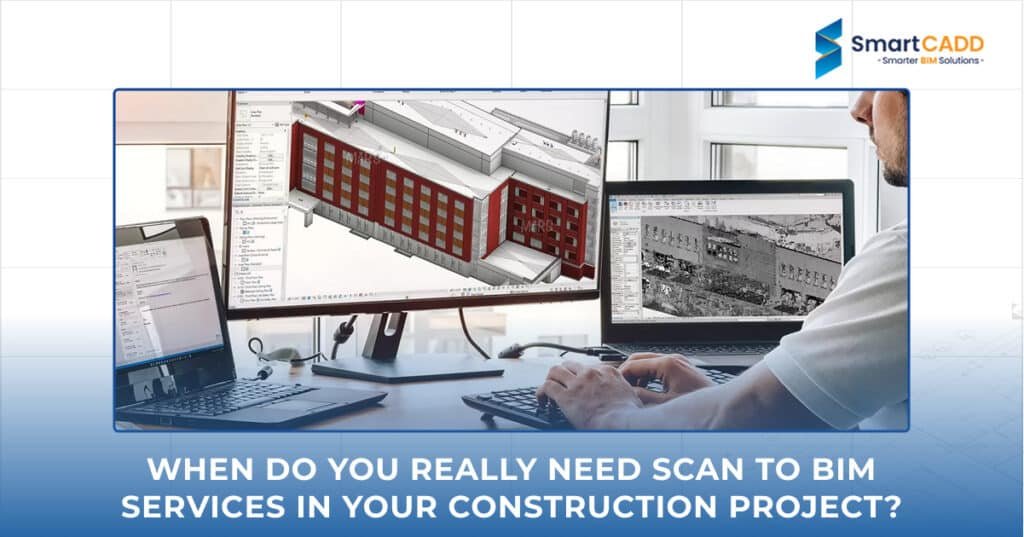
3D Scan to Revit Modeling
This service starts with laser scanning. It captures the exact shape and size of a building. That data becomes a point cloud, which is then turned into a Revit model. It is useful for old buildings, renovations, or any space that needs accurate documentation.
Use case: A team restoring a heritage site used Scan to BIM to avoid damaging original details. The model helped them plan without guesswork.
Watch how scan-to-BIM works—from site scan to Revit model
A quick demo can show how design issues are spotted and resolved in real time.
Scan To BIM in Autodesk Revit – Inserting Point Cloud
Architectural CAD Drafting
Not every project starts with BIM. Many still rely on CAD. It is a tool architects use to create clean, detailed drawings—especially when working with older buildings or records.
Architectural drafting services help organize drawings into layers. One for structure. One for plumbing. One for electrical. This makes it easier to read and update plans without confusion.
CAD services also support precision. Architects use them to show exact dimensions and materials with notes. These drawings follow industry standards and are often needed for permits or contractor handoffs.
Some teams prefer CAD because it works well with legacy files. Others use it alongside BIM to handle specific tasks. Either way, it is still a reliable part of the process.
Construction Documentation
Every project needs clear drawings. These include
- Floor plans
- Elevations
- Sections
- Schedules
Together, they guide the build and help teams get permits.
Construction Drawing Services make sure everything is documented properly. These drawings show what is being built and how everything connects. They also list the materials used for each section. They are also used to create permit sets for approval by local authorities. These drawings must follow local rules, which change by location and project type.
With BIM, drawings come straight from the model. If something changes—like a wall or window—the drawings update automatically. That keeps everything consistent and saves time.
Architectural design services use this process to avoid errors and reduce back-and-forth. It is a practical way to move from design to construction without losing details.
To see how BIM integrates with traditional documentation, read our breakdown of What Are Construction Documents? Key Components Explained.
Here is a sample annotated drawing set.

CAD Services
Some projects begin with BIM, but many still rely on CAD—especially when working with older drawings or formats that BIM does not support.
CAD services cover:
- 2D drafting for plans, sections, and elevations
- 3D modeling to visualize spaces and components
- File conversion from paper or outdated formats
- Detailing for construction and fabrication
These tasks help teams stay accurate and organized. CAD is often used to update old plans, prepare permit sets, or create technical drawings that follow local standards.
It also works well with BIM. For example, teams might clean up scanned drawings in CAD before importing them into a BIM model. Or they might use CAD for quick edits that do not need full model updates.
How BIM Enhances Design, Collaboration & ROI
Benefits of BIM Architectural Modeling Services
BIM is not just about 3D models. It is a way to make smarter decisions from start to finish.
Here is what Architectural BIM Modeling Services offer:
- Everyone uses the same model and sees changes right away.
- BIM finds problems—like systems clashing—before building starts. It saves time and rework.
- Clear plans and correct information mean fewer questions from clients and regulators.
- BIM models include specs, maintenance info, and system details. That helps owners manage buildings long after they are built.
These benefits make BIM architectural modeling services a practical choice for teams that want fewer delays and better results.
Workflow Integration with Other Stakeholders
BIM lets all teams work on the same model and see changes on the go. It keeps things clear and avoids confusion.
Here is how it works across key roles:
- Architects: They shape the design. BIM lets them see how their plans affect structure and systems in advance
- Structural Engineers: They focus on keeping the building safe and stable. BIM helps them catch problems early, before they get expensive.
- MEP Teams: These teams handle mechanical, electrical, and plumbing systems. These can clash with walls or beams, but BIM spots those issues before building starts.
- Contractors: They use the model to plan what is needed and when. It helps them stay on track and ask fewer questions during the build.
When everyone uses the same source, decisions happen quicker and less gets missed.
Implementing BIM in Your Next Project
Step-by-Step BIM Workflow

- Conceptual Design: Sketches and ideas take shape. Teams define goals, space needs, and layout.
- BIM Modeling: The design is built into a digital model with structure, systems, and materials.
- Documentation: Drawings and schedules are pulled from the model. These support permits and planning.
- Coordination: All the teams work in the same model. Conflicts are resolved early.
- Handover: The final model includes data for facility management—like maintenance and system specs.
To Sum Up,
Choosing the Right BIM Partner
Choosing a BIM partner is not just about knowing the software. It is about working with a team that understands your industry and follows clear quality checks with clear communication. They should be able to work closely with your team and adapt to your project needs. Look for experience in Architectural BIM Modeling Services, along with strong QA protocols. The right partner helps avoid delays and keeps coordination smooth.
About SmartCADD
SmartCADD is a trusted provider of Architectural BIM Services, offering CAD and BIM solutions across India and Australia. Our team works with architecture and engineering firms. Our models are accurate, and we handle detailing and documentation with care.
We have worked on healthcare, commercial, and data centre projects. We know how to meet tight deadlines and still do the job right. Our team adjusts to project needs and stays consistent by following clear quality checks from start to finish.
Source: https://www.smartcadd.com/what-are-architectural-bim-services-benefits-workflow-industry-impact/
Why Early MEP Coordination is the Hidden Key to a Successful Project Lifecycle?
Construction projects are complex. They involve numerous moving parts. When mechanical, electrical, and plumbing (MEP) systems are not planned together from the outset, problems arise. Pipes clash with beams. Wires get rerouted. Teams scramble to fix issues on-site. Costs rise. That is why early MEP Coordination matters. It helps teams spot problems before they build. With the right MEP coordination services, you avoid delays and reduce waste. That means your project stays on track. It is not just a technical step—it is a smart way to work.
This blog examines why early MEP coordination is crucial in maintaining project timelines and reducing costs.
Here is what you need to know.
The Cost of Getting MEP Wrong
Real-World Failures from Poor Coordination
That stat checks out.
Poor coordination between MEP systems leads to rework. According to SmartCADD’s guide on MEP coordination, this can cause up to 20% of project delays. That is a big setback, especially when it is avoidable. Planning these systems early is not just helpful. It is necessary.
What Is MEP Coordination?
Planning the integration of MEP systems into a building is known as MEP coordination. These systems need to work together without getting in each other’s way. Failure to align them early results in problems later on, such as
- Pipes colliding with ducts
- Wires obstructing airflow
- Teams are wasting time repairing them on-site
Here is what each system does:
- Mechanical systems include heating. They also cover ventilation and air conditioning. These control temperature and airflow for the best indoor air quality.
- Electrical systems manage power throughout the building. They include lighting, outlets, and switches. These systems also support equipment connections. Wiring and distribution panels make it all work
- Plumbing systems carry clean water into the building. They also remove wastewater through drainage lines. Some plumbing setups include fire protection systems. That often means sprinklers and related piping.
MEP coordination makes sure everything fits the building’s structure, follows building codes, and keeps the project moving.
For a deeper dive into the full coordination process, check out our Complete Guide to MEP Coordination in Building Projects.
Why Early Coordination Changes Everything
Benefits of Early MEP Coordination
Early MEP coordination helps teams avoid problems before they start. When MEP systems are planned from the beginning, everything fits better. There is less confusion and fewer delays, which helps to decrease costs.
Here’s what early coordination improves:
- It decreases design conflicts. Systems do not clash. Ducts, pipes, and wires have space to work properly.
- Less rework and fewer cost overruns. Teams do not waste time fixing mistakes on-site.
- With better system integration, HVAC, electrical, and plumbing work as one connected setup.
- Crews follow clear plans. Work moves faster and stays on track.
Using MEP coordination services and MEP clash detection services early in the process makes a real difference. It is not just about avoiding problems; it is about building smarter from the start.
Comparing early vs late coordination outcomes
| Aspect | Early MEP Coordination | Late MEP Coordination |
| Design Conflicts | Identified and resolved during planning | Discovered on-site, causing delays |
| Rework | Minimal—issues are caught early | Frequent—requires redesign and reinstallation |
| Cost Impact | Controlled budget with fewer surprises | Cost overruns due to last-minute fixes |
| System Integration | Seamless—HVAC, electrical, and plumbing work together | Disjointed—systems compete for space |
| Construction Workflow | Streamlined—clear plans and fewer interruptions | Disrupted—teams wait for clash resolution |
| Compliance with Codes | Easier to meet building codes and standards | Risk of non-compliance and failed inspections |
| Use of MEP Services | Strategic—uses MEP coordination and clash detection | Reactive—uses services to fix problems after they occur |
Stakeholders Who Must Be Involved Early
MEP coordination works best when the right people are involved early. If key teams aren’t part of the planning, things get missed. Architects, engineers, contractors, and MEP specialists all need to be in the loop from the start. It helps everyone understand the layout and the limitations. They also came to know how each system fits into the bigger picture. Early input helps avoid confusion in the future.
- Architects need to know how the systems will fit into the design. If they are looped in late, layouts get redrawn.
- Engineers help make sure systems do not interfere with structural elements or site conditions.
- Contractors understand how things get built. Their input helps avoid plans that look good on paper but do not work on-site.
- MEP specialists plan the details—ducts, wiring, pipes—and spot clashes before they happen.
How BIM & 3D Modeling Solve the Problem
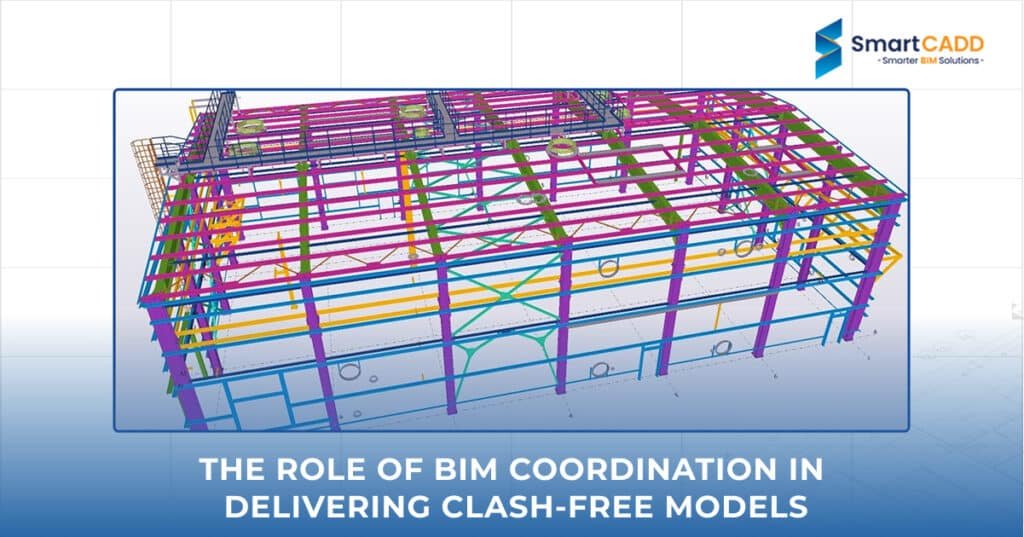
BIM MEP Coordination in Action
MEP 3D modeling starts in Revit, where engineers build detailed models of
- HVAC
- Electrical
- Plumbing
- Fire protection systems
These models are intelligent as they carry data about dimensions and materials. They also include performance details for each system. This is the foundation of Building Information Modeling (BIM).
Once the models are built, they are exported to Navisworks. That is where coordination happens.
To understand how MEP services integrate seamlessly within BIM workflows, explore our MEP Services and Its Role in BIM Services.
How Revit and Navisworks Work Together
- Modeling in Revit
Engineers create system layouts with full 3D visualization. Each duct, pipe, and cable is modeled with actual dimensions. This helps ensure everything fits in the real building space.
- Aggregation in Navisworks
All models—architectural, structural, and MEP—are combined into one environment. This lets teams see how systems interact in the actual building space.
- Clash Detection Software
Navisworks runs automated checks to find conflicts. For example, a duct running through a beam or a pipe overlapping with an electrical conduit. These clashes are flagged and tracked.
- Issue Resolution
Teams review clashes, assign them to the right stakeholders, and update the Revit model. This loop continues until the model is clash-free.
Watch BIM Clash Detection in Action
Want to show how this works visually? A short demo can highlight how clashes are found and fixed in real time.
Clash Detection with Revit and Navisworks
3D MEP Coordination for Complex Projects
In complex buildings, MEP systems are tightly packed. There is little room for error. Hospitals, data centres, and high-rises need careful planning to avoid clashes and delays.
3D MEP coordination helps teams model MEP systems before construction starts. Using BIM tools, teams can see how systems fit together. They spot problems early and fix designs before construction starts.
Where It’s Most Useful
- Hospitals: Systems like HVAC, medical gas, and power need careful planning. Each one must be placed with precision to avoid issues later. A small mistake can affect patient care.
- Data Centres: Cooling, power, and fire protection systems must be coordinated. Each system relies on the others to keep things working. The building can not afford to shut down.
- High-Rise Buildings: Each floor has tight spaces, so mistakes can not happen. Stacked services make careful coordination essential.
Make Coordination a Priority
Step-by-Step Early Coordination Workflow

❶ Kickoff meeting with all stakeholders
The process starts with a full-team meeting that includes,
- Architects
- Engineers
- Contractors
- MEP specialists
They agree on goals, deadlines, and roles. This is where teams agree on what is expected and talk through site limits. Everyone leaves with a clear plan.
❷ Integrated design using BIM tools
Once the team is agreed, the design begins in Revit. The MEP system is built in 3D with real measurements. These models are combined into one shared layout so everyone works from the same plan, reducing confusion.
❸ Weekly clash detection reviews
Models are imported into Navisworks for clash detection. The software checks for overlaps like
- A pipe running through a beam
- A duct is blocking a light fixture
Clashes are spotted and sent to the right team to fix. Weekly checks help identify problems early and keep things on track.
❹ Final sign-off before construction
Once clashes are fixed and everyone agrees, the model is ready to build from. Final sign-off makes sure the build matches the plan. No unexpected changes on-site.
Learn how effective MEP design and drafting contribute to better building performance in our blog on How MEP Design and Drafting Improve Building Efficiency.
Choosing the Right MEP Coordination Partner
These systems’ coordination is not just about software; it is about clear communication and knowing how to manage complex systems. The right partner helps avoid delays and reduce rework to keep your project on track.
What to Check
- Experience
Have they handled high-rise buildings like hospitals and data centers? These projects demand real-world coordination skills. - BIM Skills
Can they deliver accurate MEP BIM modeling services using tools like Revit and Navisworks? Do they know how to run clash checks and manage shared models? - Past Projects
Ask for examples. Look at how they solved problems and how the final build matched the plan.
Summing Up
Picking the right MEP coordination partner isn’t a quick task. It shapes how your entire project runs. In complex projects, even small errors can cause major delays. That is why experience matters. You need a team that understands
- How systems interact
- How space constraints affect layout
- How to keep everyone aligned from design to construction
It is not just about using BIM tools. It’s about using the tools in real projects. Talking clearly and taking responsibility matter just as much as technical know-how.
If you want a team that has done this before and knows how to get it right, SmartCADD is the best choice.
Why SmartCADD Works
SmartCADD brings clarity to MEP Coordination. Our team knows BIM inside out and has worked on tough projects across sectors. We focus on precision and clear collaboration. If you need reliable MEP BIM modeling services, SmartCADD is built for it.
Fractional COO: Boost Growth Without A Full-Time Hire
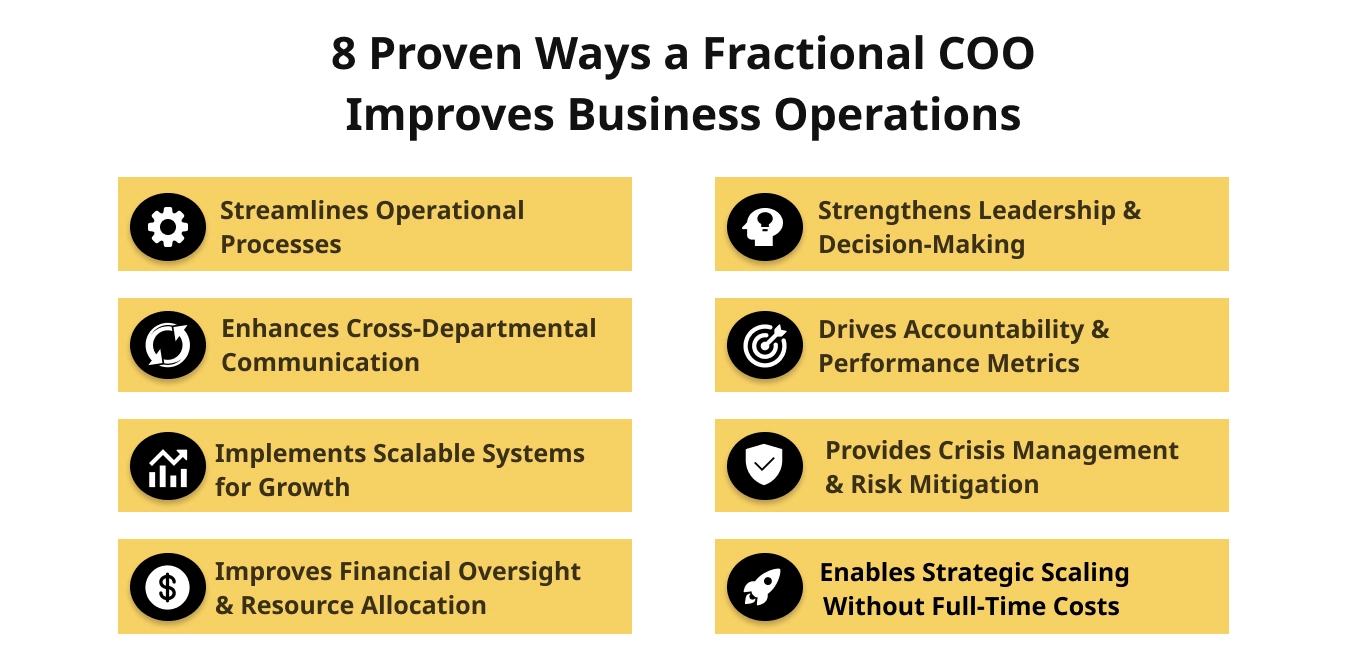
When a business is growing, things can feel overwhelming. Teams can lose focus, and processes and decisions slow down. A business in this state needs someone who can step into the flow and keep things moving, but hiring a full-time COO is expensive and not always practical. This is where a fractional COO comes in.
A fractional COO is a senior operations expert who works with your team on a flexible schedule. They work part-time but bring a wealth of experience. A business gets the help that’s needed without the cost of a full-time hire. Here is what a part-time COO offers:
- Clear priorities and better workflows
- Flexible support based on your needs
- Lower cost compared to a full-time executive
This setup works well for startups and growing companies that have small teams, since they need structure but are not ready for a full-time executive.
In this article, we will explore how a Fractional COO can help your business grow without the cost or commitment of a full-time hire.
What Is a Fractional COO?
A fractional COO is a part-time operations leader. You get their experience and input, but only when you need it. They step in to fix systems and guide teams, and help keep things running smoothly. They are not a permanent hire, but they amalgamate into the team.
How a Fractional COO is Different from a Full-Time or Interim COO
| Role | Time Commitment | Cost | Use case |
| Full-Time COO | Daily, permanent | High (salary + benefits) | Long-term leadership |
| Fractional COO | Part-time, ongoing | Lower | Growth-stage support |
| Interim COO | Full-time, short-term | Moderate to high | Crisis, transition, leadership gap |
A fractional COO works part-time. An interim COO works full-time for a short period, usually during changes or challenges.
When Should You Hire a Fractional COO
If your business is scaling quickly and things feel overwhelming, it may be time to bring in a fractional COO. Perhaps your team is losing focus, your systems can’t keep up, or you need stronger planning and structure to keep everyone aligned. While it might not yet make sense to hire a full-time executive, a fractional COO offers the leadership and operational support you need, without the long-term cost. They step in part-time, as needed, to streamline processes and keep momentum moving forward. This model is ideal for startups and small teams that want experienced guidance without a full-time hire, especially during times of transition or rapid change, when clarity and direction are most critical.
What Does a Fractional COO Do?
A fractional COO brings executive-level leadership without the expense of a full-time hire. They are especially valuable when growth creates bottlenecks and teams need clearer direction. By streamlining operations, strengthening systems, and guiding leaders, they keep the business on track. Unlike consultants who stop at recommendations, fractional COOs stay engaged in execution – building processes, leading meetings, and managing daily operations as needed. They move easily between strategy and action, working alongside founders and staff to clarify roles, improve communication, and build reliability. The result is hands-on leadership to help growing businesses scale smoothly.
Industries That Benefit Most
Startups
Startups move fast, but speed without structure leads to confusion. A fractional COO helps founders:
- Set up basic systems
- Define roles clearly
- Focus on what matters
- Avoid burnout
Nonprofits
Nonprofits often run lean. They care about impact, but they still need structure. A fractional COO for nonprofits helps:
- Build clear processes
- Improve team coordination
- Handle reporting and compliance
- Stretch limited resources
Law Firms
Law firms deal with deadlines, clients, and compliance. But many lack someone to manage operations. A fractional COO for law firms helps:
- Organize workflows
- Improve staff performance
- Streamline client onboarding
- Support growth
Lawyers stay focused on legal work. The COO handles the rest.
Agencies
Agencies juggle creative work, clients, and deadlines.. A fractional COO helps:
- Build better project systems
- Improve delivery
- Support hiring and scaling
- Keep the team aligned
Fractional COO Services Breakdown

Operational Audits
Before anything improves, you need to know what is broken. This includes:
- Checking how things work currently
- Finding out what is slow, missing, or not working well
- Mapping out what is missing
- Recommending practical changes
Team Alignment
Even good teams lose focus. A fractional COO can help:
- Define who is responsible for what
- Set shared goals
- Improve communication
- Build accountability
- Adds clarity and structure.
KPI Development
You can not manage what you do not measure. A COO helps you:
- Choose the right metrics
- Set targets that make sense
- Build simple tracking systems
- Use data to guide decisions
Infrastructure Building
A Fractional COO helps build systems that guide a business even as things get busy.
- Project management tools
- Hiring and onboarding processes
- Internal documentation
- Reporting cycles
Engagement Models & Rates
Here is how the engagement usually works:
Project-Based
This is for short-term needs. You hire a fractional COO to solve a specific problem:
- Run an operational audit
- Build a hiring process
- Set up KPIs
You pay a flat fee or an hourly rate. Once the project is done, so is the engagement.
Retainer-Based
This is for ongoing support. You get consistent access to a COO who:
- Oversees operations weekly or monthly
- Supports leadership and team alignment
- Tracks performance and adjusts systems
It is billed monthly. You get continuity without hiring full-time.
ROI vs. Full-Time Hire
Hiring a full-time fractional COO can be very expensive with a high salary, bonuses, and benefits. A fractional COO salary model gives you:
- Flexibility
- Faster onboarding
- Lower overhead
If you are not ready for a long-term hire, hiring an interim COO or fractional COO is a good choice.
To Summarize:
You may not need a full-time hire to fix your operations, but you need someone who knows how to build systems and lead teams. This is what The Field Group does.
We do not just give advice; we improve operations and help you move forward. Our fractional COO services are designed for small businesses that require genuine leadership without the associated overhead.
If you are scaling or stuck, we can help you focus on what matters: execution, clarity, and progress. And when things are running smoothly, we step back, leaving your team stronger and your systems in place.
It is simple. It works.
Modern Trends in Exhibition Stall Design for 2025
Exhibition stall designs are changing. In 2025, they are not only places to display products, but they are spaces built to tell a story. Brands want stalls that look good and say something clear about who they are.
Designs are simpler. Layouts are more open. And visuals are sharper. The goal is to help people move freely, feel curious, and stay longer.
Here are a few formats that stand out:
- 3D exhibition stall design adds depth and makes the space feel more interactive.
- Open layouts remove barriers and invite people in.
- Minimalist setups keep things clean and focused.
Good stall design isn’t about being flashy. It’s about being clear, useful, and easy to remember.
This blog looks at how exhibition stall design is changing in 2025. If you are searching for exhibition stall design ideas, this guide gives you a clear starting point.
The Rise of Immersive Experiences
Exhibition stalls are not just for displaying products now. They are built to make people feel something. Brands are using 3D exhibition stall designs, interactive tech, and sensory design to pull visitors in and keep them interested.
What’s Changing
- 3D exhibition stall design helps guide people through the space. It is not just about looks—it is about flow.
- AR and VR let visitors explore products in a virtual setting. They can test, view, or interact without needing the real thing.
- Touchscreens and digital displays offer demos, customisation, and quick feedback.
- Sound, scent, and lighting add emotion. These elements make the experience stick.
Real-World Examples
- One brand used VR to show off its full product line in a small space. Visitors could walk through a virtual showroom.
- Another used AR to explain how its machines work. No need for bulky samples.
- A sustainability company built an open layout with soft lighting and quiet soundscapes. People stayed longer and asked more questions.
This shift is not about being flashy. It is about helping people connect with what a brand stands for—and remember it after they leave.
Minimalism & Functionality
A simple exhibition stall design does not mean boring. Minimal layouts often stand out more, especially when they are paired with smart structure and bold visuals with a unique twist. These stalls focus on what matters:
- Clear messaging
- Easy navigation
- Strong brand presence
Why It Works
- Quick setup gives you more time to focus on visitors, not logistics.
- Clear design helps people see your message without distractions.
- Smaller stalls use space wisely and still make a strong impression.
- Lower build complexity makes it easier to adapt, reuse, or scale the design.
Where It Fits Best
- Startups looking to make a sharp impression without overcomplicating things.
- Tech expos where clarity and innovation matter more than decoration.
- B2B showcases that prioritise direct communication and a professional tone.
Minimal does not mean your stall is missing something, but it means choosing what matters. When used properly, it helps you attract visitors without trying too hard.
Open-Sided Layouts – A Strategic Advantage

Open-sided stalls help people move freely and notice your brand. They are built to handle more foot traffic and make the space feel welcoming.
The number of open sides depends on where your booth sits—and how much attention you want.
2-sided open exhibition stall design
- Best Placement: Corner locations
- Key Benefit: Entry from two directions and offers good visibility
- Design consideration: Keep branding visible from both open sides
3-sided open exhibition stall design
- Best Placement: Peninsula setups
- Key Benefit: Semi-enclosed feel and offers balanced openness
- Design consideration: Use walls to guide attention without blocking flow
4-sided open exhibition stall design
- Best Placement: Island booths at large expos
- Key Benefit: Maximum exposure and offers walk-in access from all sides
- Design consideration: Strong central branding and modular, flexible layout
Each layout has its plus points. Your choice depends on location and goals.
Sustainable Trends in Exhibition Stall Design
At Design LimeLite, we design exhibition stalls with care. We focus on what we can control using better materials and smarter processes to reduce waste.
We do not offer modular or reusable systems, but we still take sustainability seriously.
What We Do
- Eco-Friendly Materials
We use eco-friendly materials when possible. They are better for the environment and still strong enough to meet design needs. - Responsible Fabrication
We build with less waste. Our process supports cleaner production, even for one-time-use stalls.
What We Don’t Claim:
- Modular Stall Scalability
Modular stalls work well for repeat setups. We focus on custom builds that fit each event. - Reusable Structures
We don’t offer reusable systems yet. But we plan carefully and choose materials that last longer and waste less.
Brands Embracing Green Exhibition Practices

Customization & Branding
Your stall should feel like your brand. Not just in colour or logo—but in how it looks, moves, and speaks to people.
What We Do
- Match your brand and audience
We study how your audience behaves. Then we build around it. Every layout, texture, and light choice is made to fit your brand’s tone. - Use light and texture with purpose
Bright spots draw attention. Soft textures invite people in. These details shape how people feel in your space. - Create zones that tell a story
We design areas for demos, chats, and quiet moments. Each zone helps visitors understand what you do—without needing a long pitch.
Layout Choices Matter
- Simple Exhibition Stall Designs
It feels open and easy to navigate. They’re great for clear messaging and fast engagement. - 3D Exhibition Stall Designs
It creates layers and movement. They invite curiosity and help build immersive experiences.
The way your stall is built affects how people see your brand. We make sure that the impression is clear, honest, and memorable.
Conclusion
Exhibition stall designs are transforming. Brands now focus more on how people move through a stall space and not just how it looks. The goal is to make things clear and true to the brand.
What’s Trending
- Layouts that guide people naturally
- Zones for demos, quiet chats, and product displays
- Lighting and texture that shape the mood
- Designs that reflect brand tone and audience habits
How to Choose the Right Layout in 2025
- Choose a simple layout for fast and clear communication
- Pick a 3D layout if you want a more layered and interactive feel
- Design based on how people move and respond—not just what you want to display
Explore how your brand can stand out with the right stall design strategy.
Design LimeLite builds stalls that feel like your brand. We do not follow templates. We shape each space around your goals, your audience, and how you want to be remembered.
If you are planning your next exhibition, we will help you make it count.
Source: https://www.designlimelite.com/modern-trends-in-exhibition-stall-design-for-2025/
What Is Exhibition Fabrication and Why Does It Matter for Brands?
As the importance of brand visibility is expanding, exhibition stall fabrication turns a brand’s ideas into real-world setups that people can see and experience.
Exhibition fabrication means building a custom stall for a trade show or event, including planning the layout and designing the structure on-site.
These events are important. You are meeting potential clients, showing off your brand, and competing for attention. A well-made stall helps people notice you. A weak one gets ignored.
This blog explains:
- What exhibition stall fabrication involves
- Why stall design matters for your brand
- How good fabrication can help you stand out
We will keep it simple and focus on what works.
What Is Exhibition Fabrication?

Definition and Scope
Exhibition fabrication helps brands to design and build a stall for a trade show or expo. It offers brands a physical space where their visitors walk into to explore their products or services and have a memorable experience.
The goal is to create a setup that feels real, easy to explore, and worth remembering. Exhibition stall fabrication makes the booth space work by
- Planning
- Building
- Setting up everything needed
Materials, Techniques, and Logistics
Fabricators use materials like
- Wood
- Metal
- Fabric
- Printed panels
Some stalls are simple and reusable. Others are custom-built for one-time use. The work includes
- Cutting
- Assembling
- Painting
- Wiring
- Packing
Logistics cover transport, setup, and making sure everything is ready before the event starts.
Design vs. Fabrication

Why Exhibition Fabrication Matters for Brands
Exhibition stall design and fabrication is not just about putting up walls and banners—it is about creating a real experience.
First Impressions and Brand Perception
People judge quickly. Your stall is often the first thing they see.
- A clean, well-built stall fabrication shows you are serious about your work
- It helps people trust your brand
- It makes you stand out in a busy event
- Good stall fabrication turns your ideas into something people can see and understand
Customization for Audience Engagement
Every brand is different. Your stall should reflect that.
- You can use exhibition stall design and fabrication to shape the layout to guide visitors
- Use colors, lighting, and displays that match your brand
- Add interactive elements to keep people interested
- Make it easy for people to learn about your products or services
ROI and Lead Generation Potential
A smart stall fabrication does more than look good—it helps your business grow.
- It draws more people to your space
- It starts better conversations
- It helps you collect leads that matter
- It gives you a chance to connect with the right audience
Exhibition stall design and fabrication offer your brand a real presence to show up and connect with people in a way that lasts.
Behind the Scenes – The Role of Fabricators
Most people see the final stall. Few know what goes into building it. Fabricators manage the real-life construction. They work with tight deadlines and changing plans.
What Exhibition Stall Fabricators Do
Exhibition Stall Fabricators in Ahmedabad turn design ideas into physical structures. Their job is hands-on.
- They read design plans
- Cut and shape materials
- Build frames, walls, and displays
- Set up the light and wiring
- Check that the stall is safe and stable
They do not just follow instructions. They solve problems on the spot.
Work with Design Teams and Marketers
Fabricators team up with designers and marketing teams. Each team member plays a part.
- Designers share the layout
- Marketers explain what the stall needs to show
- Fabricators adjust the build to match both
It is a back-and-forth process. Changes happen. Everyone needs to stay flexible.
Timeline and Execution Challenges
Exhibition stall fabrication is rarely smooth. Things go wrong.
- Materials arrive late
- Designs change last minute
- Venues have strict rules
- Setup time is short
Fabricators deal with all of it. To get everything done, they work fast and stay calm.
What to Look for in an Exhibition Stall Design and Fabrication Company
Finding the right exhibition stall design and fabrication company is not just about how things look. It is about working with a team that understands your goals and delivers.
What to Look For
Here is what matters when choosing a stall partner:
- They build stalls that match your brand and audience
- They handle everything—from design to setup
- They have worked on similar events before
- Their work is safe, sturdy, and easy to manage
- They stick to timelines and communicate clearly
Questions to Ask Before Hiring
Before you commit, ask:
- Can you show examples of past work?
- What is your process for changes and approvals?
- Do you manage transport and setup?
- How do you handle last-minute issues?
- What is your timeline from start to finish?
Local Expertise: Spotlight on Exhibition Stall Fabricators in Ahmedabad
Working with Exhibition Stall Fabricators in Ahmedabad has its benefits:
- They know the local venues and rules
- They can respond faster if something changes
- You save time and cost on transport
- You get support during setup and breakdown
Local teams often bring practical experience that helps things run smoothly.
Before-and-After Impact on Brand Visibility

Conclusion
Exhibition Fabrication is not just about putting up a stall. It includes how you represent your brand and how people remember it.
A property developed stall helps your brand stand out and connect with the right audience. It gives your team the space and tools to speak clearly and work without any hassle. And it turns glances into real conversations.
You do not need to be flashy. You just need to be clear. That is what makes your brand different.
If you are looking for a partner who gets this, Design Limelite is worth considering. They do not just build stalls—they shape experiences. With in-house design and fabrication, they focus on your story and strategy, as well as how people feel when they walk into your space.
Source: https://www.designlimelite.com/what-is-exhibition-fabrication-and-why-does-it-matter-for-brands/
Clear Aligners vs Invisalign Braces: Pros, Cons, and Costs
In recent years, the popularity of Clear Teeth Aligners and invisible braces has increased. Whether it is teenagers or working professionals, a larger number of people are using invisible solutions compared to traditional metal braces.
It does not mean that traditional braces are not working well, but new options like Invisalign orthodontic treatment offer a removable and almost invisible way to straighten teeth. These innovations are changing the way people get a perfect smile without compromising on results.
In this blog, we will go through
- The pros and cons of clear aligners vs Invisalign braces.
- A detailed cost comparison.
- Which option suits different age groups and dental complexities
- Tips to choose the right treatment
If you want Invisalign orthodontic treatment or compare it with other clear teeth aligners, you can make a better decision with this post.
What Is Invisalign and How Does It Work?
Definition: What is Invisalign?
Invisalign is one type of clear teeth aligner that is used in orthodontic treatment to straighten teeth or adjust tooth alignment. It uses customized and removable plastic trays that fit over your teeth and shift them into the right position over time. This process is known as Invisalign orthodontic treatment.
The Technology Behind Invisalign
Invisalign aligners are made using advanced 3D imaging and SmartTrack™ thermoplastic material. It offers:
- Accurate tooth movement guided by a digital treatment plan
- Natural and comfortable fit, shaped to your gums
- Consistent results as each aligner shifts teeth step by step
- Take them out anytime for eating and cleaning
Each aligner is worn for 20-22 hours a day. It gets replaced every 1-2 weeks as your teeth move towards their ideal position.
Please review our detailed guide on What Is Invisalign? A Comprehensive Guide to Clear Aligners
Invisalign vs Traditional Braces: Key Differences
Here is a quick comparison of Aligners vs Braces.
| Feature | Invisalign Aligners | Traditional Braces |
| Visibility | Clear and nearly invisible. It is great for adults and teens who want a discreet look. | Highly visible, as it is made of metal or ceramic brackets. |
| Removability | Yes, for eating and brushing. No food restrictions. | No, fixed to teeth. Restrictions on certain foods. |
| Comfort | Smooth plastic trays with less irritation to cheeks and gums | Wires and brackets may cause soreness or mouth sores |
| Maintenance | Easy to clean aligners and teeth. Maintain oral hygiene. | Need careful brushing around brackets and wires |
| Customization | Custom-made using 3D scans for precise, step-by-step movement | Adjusted manually by the orthodontist during regular visits |
| Best for | Small to medium alignment problems. Best for aesthetic-conscious users | Complex cases like severe crowding, rotated teeth, or bite correction |
| Office Visits | Fewer appointments – aligners are pre-planned and changed at home | Frequent visits are needed for tightening and adjustments |
| Treatment Time | Usually 6-18 months for mild to moderate cases | Usually 1-2 years; better for complex dental issues |
| Discipline Needed | Must wear aligners 20-22 hours/day for best results | No user discipline needed-braces stay on |
| Cost | ₹1-₹3 lakhs in India; may vary based on complexity | ₹40,000–₹1 lakhs in India; Generally covered more by insurance |
You can choose according to your comfort and treatment needs after going through the differences between braces and aligners. When you understand the pros and cons of Braces vs Invisalign, you can make a better decision.
Go through the benefits of Invisalign and compare the Invisalign vs braces cost to identify the option that suits your budget.
Invisalign vs Braces: Which Is Faster?
Average treatment duration for both.
| Treatment Type | Typical Duration | Notes |
| Invisalign | 12–18 months (as short as 6 months for minor cases) | Requires 20–22 hours/day wear time |
| Braces | 18–24 months (up to 36 months for severe cases) | Works continuously, no user compliance needed |
Factors That Affect Speed
- Severity of dental issues
- Mild misalignment = faster Invisalign
- Patient compliance: Invisalign speed depends on how constant aligners are worn
- Treatment goals
- Cosmetic fixes need Invisalign
- Structural corrections need braces
- Technology used
- Invisalign uses digital mapping for precision
- Braces use manual adjustments
Cost Comparison: Invisalign vs Braces
| Treatment Component | Braces (Metal/Ceramic) | Invisalign (Clear Aligners) |
| Initial Consultation | ₹500–₹2,000 | ₹500–₹2,000 |
| Treatment Cost | ₹40,000–₹1,00,000 (metal/ceramic) | ₹1,00,000–₹3,00,000 (Invisalign) |
| Follow-Up Visits | Included in the total cost | Included in the total cost |
| Duration of Treatment | 18–24 months | 12–18 months |
| Insurance Coverage | More likely to be covered | Less coverage for adults |
| Financing Options | EMI plans available | EMI/payment plans available |
Key Insights
- Metal braces are more affordable and generally covered by insurance.
- Invisalign costs more because of its custom trays and the latest technology, but many clinics offer EMI or different payment options.
- Location matters as prices change in different cities and clinics in India.
Invisalign vs Braces Cost: Which Is Worth It?
If you are worried about your budget, braces could be the best choice. But if you focus more on comfort rather than budget, Invisalign could be the best choice. You can also have financing options available with Invisalign.
Conclusion
Let The Dental Wellness Center do what suits you best. Your dental needs and budget will help you choose between Invisalign braces and traditional braces.
Braces are better for
- Complex corrections,
- Require less daily discipline
- Often more affordable
Clear teeth aligners like Invisalign offer a clear and flexible experience. It is good for small to medium issues, but it needs consistent wear and may cost more.
How to Decide
Ask yourself:
- Do I need big dental corrections or just small adjustments?
- Am I okay with visible braces?
- Can I wear aligners every day?
- What is my budget, and do I need financing options?
Still wondering Invisalign vs Braces: Which is Better? Focus on the benefits of Invisalign, compare the Invisalign vs braces cost, and check out Invisalign vs Braces Before and After results to see what is possible.
Source: https://www.thedentalwellnesscentre.in/clear-aligners-vs-invisalign-braces-pros-cons-costs/
How Dunnage Bags Prevent Load Shifting and Cargo Damage in Transit
Cargo damage during transportation costs money. It decreases the speed of deliveries and creates waste that irritates customers. Generally, it happens because things move around during shipping. A bumpy road and a sharp turn can move the load and break what is inside. That is when dunnage bags come in.
These bags are inflatable cushions placed between boxes and pallets to fill empty spaces and keep cargo safe from any movement. Whether you are shipping by truck, train, or sea, shipping dunnage keeps everything in place.
Cargo airbags are simple and affordable to use. They do not need any fancy equipment. Just inflate, pace, and secure. And they work.
This blog walks through how dunnage bags stop cargo from shifting and reduce damage to deliver the shipment safely. If you are transporting anything fragile or heavy, this matters.
What Are Dunnage Bags?
Dunnage bags are inflatable cushions which is used to keep cargo from moving during the transportation process. They are placed in the empty spaces between boxes or pallets. Once inflated, they keep cargo from moving and help prevent damage.
Also read our blog on, Which Industries Use Dunnage Bags for Cargo Safety?
What Is the Purpose of a Dunnage Bag?
The purpose is very simple: To stop cargo from any movement during shipping.
When goods move around, they can break or tip over. A shipping airbag helps prevent that. It adds pressure between items so they stay where they should. No matter which mode you choose for shipping, inflatable dunnage bags ensure your cargo remains as it is.
Types of Dunnage Bags
There are a few kinds of industrial dunnage bags depending on what you are shipping.
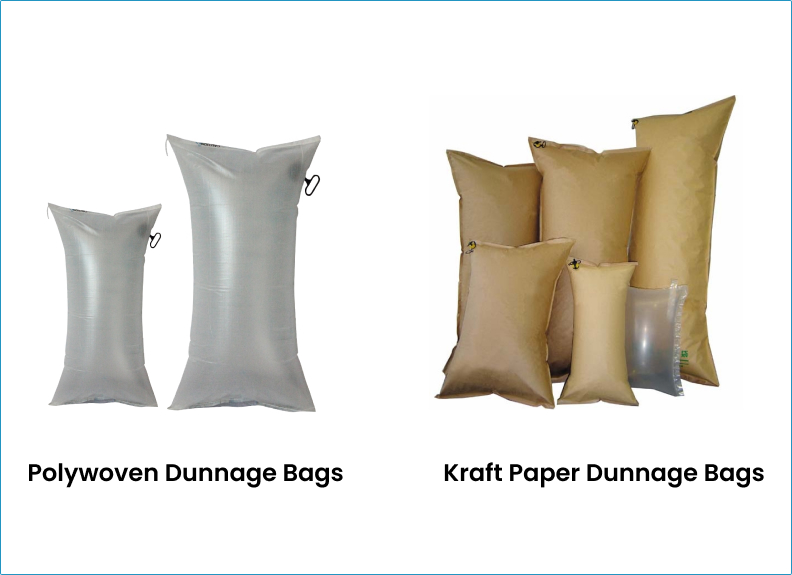
- Paper Dunnage Bags: It is made from kraft paper and a plastic inner lining. These are good for lighter loads and are generally used in consumer goods or food transportation.
- Polywoven Dunnage Bags: It is made from woven polypropylene (Plastic). These are strong and reusable. These are good for heavy cargo like machinery or bulk goods.
Each type of shipping air bag is built to perform a particular job. When you select the right one, it protects your goods and avoids damage.
Please read our detailed guide on The Ultimate Guide to Dunnage Bags: Types, Uses, and Benefits.
Dunnage in Trucking and Container Shipping
What is dunnage in trucking?
In trucking, dunnage refers to materials used to keep cargo stable inside trailers and prevent items from sliding or tipping. This includes
-
- Wood blocks
- Foam pads
- Shipping airbags
Drivers use them in flatbeds and dry vans, where sudden stops or sharp turns can move the load. Dunnage avoids damage and keeps the truck balanced.
Container dunnage
In container shipping, dunnage performs the same job, but the environmental conditions are different. Containers travel long distances and face
- Constant movement
- Stacking pressure
- Temperature changes
That is why airbag shipping is common here. Inflatable dunnage bags go between pallets or boxes to hold the load and absorb shock.
Purpose and Benefits of Using Dunnage
What is the purpose of using dunnage when securing cargo?
Dunnage keeps cargo stable by
- Filling the gaps
- Adding pressure
- Stopping items from sliding/tipping
Whether it is wood blocks or cargo air bags, the goal is the same: to keep things as they are during the entire shipping process.
What is dunnage primarily used to protect cargo from?
Dunnage protects cargo from damage caused by
- Movement
- Shock
- Moisture
It acts like a buffer. Without it, goods can
- Shift
- Bump into each other
- Get crushed
Why is it important to use dunnage when moving loads?
There are high chances that loads that move can break and cause accidents or delays during transportation. Using shipping dunnage makes transport secure and more reliable. It helps to follow safety rules and decrease the chance of returns or claims.
Benefits of Using Dunnage
- Cargo moves during transit. Dunnage stops that.
- Goods get damaged from bumps. Dunnage cushions them.
- Loads can tip or slide. Dunnage holds them in place.
- Some dunnage materials block water or dirt from reaching the cargo.
- Fewer damaged items mean fewer complaints and lower costs.
How Dunnage Bags Work

Inflatable dunnage bags are simple tools, but it is important to use them the right way for better results. Here is how they work:
Inflation Process
You inflate the bag using a pump or air compressor.
- Attach the nozzle to the valve.
- Fill the bag until it is firm.
- Do not overinflate, it can burst.
- Do not underinflate, it will not hold the load.
Most industrial dunnage bags have pressure limits. Check the label. Light-duty bags usually go up to 2 PSI. Heavy-duty ones can handle more.
Placement Techniques
Where you place the bag matters.
- Put it between cargo, not under or on top.
- Center it in the gap so it touches both sides.
- Place it at mid-height, not too low or high.
Good placement helps the bag do its job. Bad placement can lead to damage.
Pressure Ratings
Each bag type has a limit.
Most bags can handle between 2 and 10 PSI. The exact limit depends on the strength of the bag and what is in the bag. Paper and poly bags follow the same general range. What matters more is the bag’s grade and how it is meant to be used – not just the material.
Match the bag to the cargo weight and transport type. Do not guess.
Preventing Cargo Loss and Damage
What will you do to prevent cargo loss or damage?
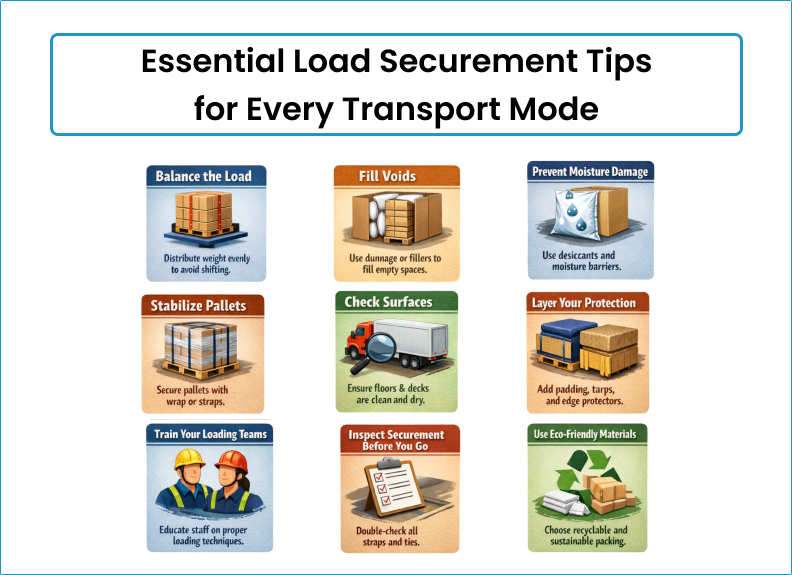
Use the right tools. Secure the load.
- Use proper packaging
- Fill empty spaces
- Brace cargo with tools like shipping airbags
These inflatable dunnage bags keep goods in place and absorb shock during the entire shipping process. They are simple to use and make a big difference.
ROI and Cost Savings
Using shipping airbags saves money.
- Less damage means fewer replacements.
- Fewer claims can lower insurance costs.
- Reusable bags cut down on waste.
- Stable loads are faster to handle, which saves time.
Most companies see fewer returns and fewer delays. That adds up.
Choosing the Right Dunnage Bag
Not all bags are the same. Picking the right one is not complicated. You just need to match the bag to the job.
What to Look At
| Cargo Type
Heavy loads need strong support. Fragile items need soft cushioning. Know what you are shipping. |
Transport Mode
Truck: Use bags that handle quick stops and sharp turns. Rail: Go with tough industrial dunnage bags that absorb shock. Sea: Choose moisture-resistant bags for long trips and a stacked container. |
| Bag Material
Paper: Good for light loads. Polywoven: Strong and reusable. |
Size and Fit
Measure the gap between items. The bag should be slightly wider than the space when inflated. Too small bags will not hold goods. Too big bags might burst. |
Tips for Sourcing Quality Products
- Check pressure ratings
- Look for certified suppliers
- Match the bag to the weight
- Ask if the bag is reusable
- Test a few before buying in bulk
Container dunnage works best when it is chosen with care. The right bag keeps cargo safe and saves money in the long run.
That’s a Wrap
Dunnage bags do one thing well: they keep cargo from moving.
That means
- Fewer broken items
- Fewer delays
- Fewer complaints
If you are using paper bags for light loads or industrial dunnage bags for heavy shipments, the goal is the same: protect what you are shipping.
Want to see how it works for your business?
Explore Dunnage Systems Inc. or request a product demo. It is a simple step that can save time and money.
Source: https://dunnagesystems.com/how-dunnage-bags-prevent-load-shifting-and-cargo-damage-in-transit/
How a Fractional CMO Helps Align Sales and Marketing for Scalable Growth in 2025
In some companies, sales and marketing don’t work as a team: They aim for the same goals, but often speak different languages. This disconnect leads to mixed messages and lost opportunities. A Fractional Chief Marketing Officer can help solve this by aligning both sides under a shared strategy, increasing efficiency, and reducing the time to a closed deal without adding a full-time executive to the payroll.
According to HubSpot, 44.8% of marketers and 40.4% of sales professionals reported that alignment between sales and marketing became more important in 2022, yet miscommunication and separate funnels still hinder performance. Gartner adds that 47% of misalignment stems from disconnected lead funnels, directly impacting conversion rates and sales cycle time.
Remote work and hybrid setups have made this gap even wider. Teams are spread out and siloed. Without a well-defined plan, tasks often fall through the cracks. This is where a Fractional CMO comes in. This part-time marketing leader helps connect the dots. They bring focus, structure, and strategy, without the cost of a full-time hire.
More small and mid-sized companies are choosing fractional CMO services. They see it as a flexible way to get expert marketing help to connect sales with marketing.
What Is a Fractional CMO, and What Do They Do?
What Is a Fractional CMO?
A Fractional CMO is a part-time marketing leader. Hiring a Fractional CMO helps companies build strategy, guide teams, and improve results, all without hiring a full-time executive.
Fractional CMOs are not just consultants; they work within the business, leading teams and projects. They work to refine messaging that resonates with your target audience, ensuring that the marketing supports the sales team.
How They Compare
| Role | Time Commitment | Strategic Ownership | Team Leadership | Cost |
|---|---|---|---|---|
| Full-Time CMO | Full-time | Yes | Yes | High |
| Consultant | Project-based | Limited | No | Medium |
| Fractional CMO | Part-time | Yes | Yes | Flexible |
A full-time Fractional Chief Marketing Officer is great for large and small companies. Consultants help with short-term advice, but a part-time CMO offers leadership and flexibility. That’s why more startups and mid-sized firms are choosing this model, whether they’re B2B or B2C.
What Do They Actually Do?
- Cross-Functional Team Leadership: Leadership is an important part of the role. A part-time CMO works with internal teams and outside partners. They work closely with sales and product teams and coordinate with leadership to keep goals aligned.
- Strategic Planning Across Sales Funnels: A part-time CMO helps connect marketing with sales. They look at the full funnel, fix broken handoffs, and build systems that consistently bring in leads.
- Brand Positioning and Messaging: A fractional CMO shapes how a brand is seen by refining the value proposition and keeping messaging clear. They also help to build go-to-market strategies that reach the right audience.
- Data-Driven Decision-Making: They use data to make decisions. They set goals and track progress. They also adjust budgets based on what’s working. They don’t guess, they measure.
The part-time CMO focuses on marketing strategy, execution, and business alignment. They make sure marketing gets results.
Here’s a simple table that compares a Fractional CMO vs. a Traditional CMO side by side.
| Category | Fractional CMOs | Traditional CMOs |
|---|---|---|
| Time Commitment | Works part-time or on specific projects | Works full-time in a permanent role |
| Cost | Costs less each month (around $5K–$15K) | Costs more each year with salary and benefits (around $200K–$400K) |
| Team Leadership | Leads internal/external teams as needed | Leads the company’s internal marketing team |
| Strategic Ownership | Handles big-picture planning and keeps teams aligned | Oversees strategy and daily execution |
| Flexibility | Works across multiple clients; scalable | Dedicated to one company; fixed scope |
| Best Fit For | Small to mid-sized growing companies that need flexible leadership and proven expertise | Enterprise companies with steady budgets and long-term plans |
| Hiring Speed | Quick onboarding, minimal overhead | Longer recruitment and integration process |
| Engagement Model | Works on contract, retainer, or as an advisor | Hired full-time with a long-term role |
| Risk Profile | Lower financial and operational risk | Higher investment and long-term dependency |
| Business Alignment | Helps connect marketing with sales and product teams | Works closely with all departments to stay aligned |
How a Fractional CMO Aligns Sales and Marketing
1. Building Unified Buyer Personas
A fractional CMO works with both sales and marketing to build shared buyer profiles. Instead of each team chasing different types of leads, they create one clear view of the ideal customer. They map the full customer journey, define what qualifies a lead, and sync everything with CRM systems. This keeps both teams aligned and accountable by measuring agreed-upon KPIs and focusing on the same goals.
2. Streamlining Messaging Across Touchpoints
They keep the brand voice consistent from start to finish. The messaging stays clear whether it is B2B or B2C. People trust your brand when it’s easy to recognize and stays consistent across all the channels.
3. Data-Driven Collaboration
A part-time CMO sets common goals and creates reports and dashboards for both sales and marketing to use. They track where leads come from and measure return on investment. They also make sure both teams are using the same data to stay aligned. When both teams use the same metrics, decisions are clearer and results are easier to track.
Teams with aligned sales and marketing see up to a 36% increase in conversion rates, according to WinSavvy’s 2024 alignment statistics.
Compared to a traditional CMO, a fractional CMO offers flexible leadership and quick integration. You get senior-level support without the cost or commitment of a full-time hire.
If your teams need alignment but you’re not ready to expand your payroll, hiring a fractional CMO might be the right move.
Benefits of Hiring a Fractional CMO

1. Cost Efficiency
A fractional CMO is a smart choice for companies that need expert help without paying for a full-time executive – no salaries and bonuses, no health insurance bills, no long-term contracts tying you down. Instead, you leverage the expertise for what you need, whether it’s a single campaign or ongoing monthly support. It’s perfect for teams that are scaling.
2. Speed to Strategy
A fractional CMO can step in quickly, assess your current strategy, and start making changes without internal delays. They help teams focus and simplify what matters most, making sure the work gets done.
3. Cross-Industry Expertise
A fractional CMO brings experience from other industries. This knowledge enables them to adapt messaging and strategy to fit different industry sectors and markets. In addition, this enables them to make experience-based decisions that avoid pitfalls and shorten the path to success.
When to Choose a Fractional CMO Over a Traditional One
Many times, a company can’t afford or doesn’t need a full-time marketing leader. Often, a fractional CMO is a better fit.
Ideal Scenarios
Your startup’s growing fast, and you need someone to lead strategy and structure. But you don’t need a full-time salary weighing you down. That’s where a fractional CMO comes in: experienced marketing leadership without the extra cost.
If you’re running a mid-sized company with a small team, you likely have people who know how to get things done. However, you also need someone who can develop a vision, lead, clarify the message, and keep everything on track. Additionally, a fractional CMO can identify gaps in personnel and help recruit suitably qualified new hires.
Decision Framework
Before you decide, consider:
- Do you need a smart strategy but not a full-time hire?
- Are sales and marketing working in silos?
- Is a new product or service launch coming up with no one to lead it?
- Do you want results without a long-term contract?
If that sounds familiar, fractional CMO services are worth considering.
Conclusion: When Expertise Meets Flexibility
If your team needs direction but not another full-time executive, it is time to hire a fractional CMO. Whether you’re scaling quickly or launching something new, or just trying to get sales and marketing on the same page, a fractional chief marketing officer gives you senior-level support without the long-term contract.
The Field Group has expertise in fractional CMO services for startups and small businesses. Our team helps sharpen your brand, drive revenue, and keep things focused, especially when you’re in the middle of change and striving to grow. We have worked across tech, media, and consumer goods, so we know how to step in and get results.
Ready to align your teams and grow your revenue? Explore how fractional CMO services can bring clarity and results to your business.
LOD in BIM Service: Reducing Errors and Improving Collaboration
In construction, small mistakes can lead to big problems. That’s why BIM Services rely on clear and accurate models. One way to make sure everyone is on the same page is through LOD (Level of Development) BIM.
If you are wondering what LOD is in construction, it is a way to show how detailed and reliable each part of the model is. When teams know what to expect from the model, they make fewer errors and work together more easily. It is a simple idea that avoids confusion and keeps projects on track.
In this article, we will explore how LOD BIM improves BIM services by:
- Fewer mistakes during design and construction
- Better teamwork across different roles
- Easy decisions at every stage of the project
Whether you are a BIM professional or just getting started with digital construction, LOD helps you with smart and more efficient project execution.
What Is LOD in Construction and BIM?
LOD means Level of Development. It is used in construction and BIM to show all the details included in a model. When the LOD is higher, it delivers more accurate and reliable information.
If you are asking what LOD is in construction, think of it as a scale. At the start, you will have rough shapes and general concepts, which are enough to visualize the idea (LOD 100). As the project design progresses and moves forward, more information is added till the time it is ready to build from (LOD 400) or shows the final built result (LOD 500).
Teams know what they are looking at with each BIM level of detail. It avoids confusion. It makes coordination easy and helps people make better decisions.
Here is why the level of detail in BIM matters:
- It sets clear expectations.
- It improves communication between teams.
- It decreases errors and rework.
Breakdown of LOD Levels in BIM Services
| LOD Level | Name | Description | Use Case |
| LOD 100 in BIM | Conceptual Design | Basic shapes and symbols representing overall massing and location | Feasibility studies,
early design intent |
| LOD 200 in BIM | Approximate Geometry | Generic geometry with estimated quantities, size, shape, and location | Schematic design, spatial coordination |
| LOD 300 in BIM | Precise Geometry | Accurate geometry, dimensions, and placement suitable for coordination | Construction documentation, clash detection |
| LOD 350 in BIM | Detailed Connections | Includes interfaces between building systems and constructability details | Advanced coordination, constructability review |
| LOD 400 in BIM | Fabrication and Assembly | Model includes fabrication details, assemblies, and installation specifications | Prefabrication, construction execution |
| LOD 500 in BIM | As-Built / Facility Management | Reflects actual installed components and conditions for operations | Facility management, maintenance |
When you use the correct BIM LOD level at each stage, keep the model balanced. It ensures that models are not too detailed or too unclear and helps to save time and rework.
How LOD Modeling Reduces Errors
LOD modeling helps teams avoid mistakes before they happen. It is part of how BIM services keep projects on track.

Here is what it does:
- It catches clashes early
With accurate geometry and system interfaces (LOD 300 and above), it is easy to identify problems, like pipes running through walls or beams blocking ducts. That means fewer issues during construction. - Clear communication among stakeholders
Each BIM level of detail sets expectations. Clear models help architects and contractors understand what is expected. No guesswork. No confusion. - It cuts down on rework and RFIs
When models are clear and complete, teams do not need to keep asking for missing information. That saves time and avoids delays.
LOD modeling is not about adding more. It is about adding what is needed so the work gets done right the first time.
Improving Collaboration Through BIM LOD Levels

Working on a building project means managing input from different teams. Everyone has their priorities. Without a shared system, everything creates confusion. That is where LOD BIM helps. By setting clear expectations for what each model includes, BIM LOD levels help each team stay aligned without any guesswork and surprises.
What LOD Does
BIM LOD levels show how much detail a model should have at each stage. Architects focus on form and space. Engineers care about systems and structure. Contractors need buildable details. It is a way to set clear expectations without any guesswork.
- LOD 100–200: Good for early design. Shapes and spaces are rough.
- LOD 300: More detail. You can start coordinating between teams.
- LOD 350: Adds connection points. Helps spot clashes before construction.
BIM LOD Real Example: LOD 350 for MEP
On a recent project, a performing arts center in California used LOD 350 for MEP modeling and coordination. The team modeled,
- HVAC
- Plumbing
- Electrical systems
They included,
- Hangers
- Brackets
- Other connection details
This helped them catch problems early—like pipes running into ducts—before anything was built.
By using LOD BIM at the right level, the project team:
- Identified and resolved system clashes early
- Shared updated plans with all stakeholders
- Improved installation accuracy and safety
Why It Matters
When everyone works from the same level of detail, things go faster. Fewer surprises. Fewer delays. BIM Services that use the right LOD level help teams stay on track.
Best Practices for Implementing LOD in BIM Projects
Getting the right level of detail in BIM matters. It helps teams avoid confusion and work more efficiently. Here is how to make LOD modeling work better in real projects:
- Define LOD Requirements Early: Decide what detail is needed at each stage. Do not wait. Clear LOD goals help everyone know what to build and when.
- Include LOD in Contracts: Make it part of the agreement. If the model needs to be at LOD 300, say it clearly. This avoids confusion later.
- Use BIM Tools to Stay Consistent: Most BIM Services include tools to manage LOD. Use them to track progress and make sure the model matches the plan.
That’s it. No fluff. Just a few simple steps to keep your BIM project on track
Closing Notes
LOD brings order to BIM projects. It tells teams what and when to model, and how much detail is needed. That means fewer mistakes and better teamwork.
SmartCADD uses LOD to keep BIM projects clear and consistent. Their team knows how to apply the right detail at the right time—so models stay useful, not overloaded.
If you want BIM services that are practical, well-structured, and built around your project goals, talk to SmartCADD. We will help you set clear standards and deliver work that fits.
Source: https://www.smartcadd.com/lod-in-bim-service-reducing-errors-and-improving-collaboration/
How Digital Twins Empower Real‑Time BIM Asset Management
The world of BIM asset management is growing rapidly. It is expanding beyond static 3D models to benefit from dynamic and data-driven systems that reflect real-world conditions in real-time. At the base of this change is the BIM digital twin. It is a virtual replica of a physical asset with live data streams. They connect the design, construction, and operations phases of the project, helping teams monitor, analyze, and improve assets more effectively.
In this blog, we will explore how digital twins are changing real-time BIM asset management to enable expert decisions and proactive maintenance during the asset lifecycle.
What Is a Digital Twin in the Context of BIM?
Definition of a digital twin: A digital twin is a virtual copy of a physical asset that uses real-time data from different sources, like sensors and IoT devices. A digital twin keeps updating to reflect the current condition and performance of the asset.
Many people ask, “Is BIM a digital twin?” The answer is NO, but they work best together.
Building Information Modeling (BIM) provides a detailed structure design and construction model. On the other hand, digital twin frameworks change the model into a live representation during the building operations phase.
To put BIM vs digital twin briefly, BIM is a blueprint of a building, and the digital twin is a constantly updating version that shows building performance in real-time. Together, they connect design plans with real-world operations. It helps teams with improved decision-making and proactive asset management.
How Digital Twins Enhance BIM Asset Management
When powered by AI (Artificial Intelligence), types of digital twins offer innovative visibility and control on the asset lifecycle.
- Real-time data integration from IoT sensors: By updating the data continuously from the linked IoT devices, a digital twin AI model reflects the current condition of the infrastructure or a building. This helps facility managers to
- Monitor performance
- Detect irregularities
- Respond proactively
- Predictive maintenance and lifecycle optimization: With the help of historical and real-time data, digital twins predict potential failures before they take place. This predictive capability offers some key advantages in BIM asset management, such as,
- Decreased downtime
- Extended asset lifespan
- Simplified maintenance schedules
- AI-powered insights for operational efficiency: With digital twin AI, stakeholders and facility managers can have actionable insights into the usage of energy and space, as well as monitor system performance. These analytics help with
- Smarter decision-making
- Decreased operational costs
- Support sustainability goals
By integrating digital twins and AI, businesses can have a smart and more responsive approach to managing construction cycles. It makes BIM asset management more intelligent than ever before.
Applications of 3D Digital Twins in Infrastructure
Let’s explore some digital twin examples across industries.

1. Smart Buildings
3D digital twin technology makes building more efficient and smart. It generates a virtual copy of a building that shows how different systems (like heating, cooling (HVAC), lighting, and room usage) are working in real time.
- Building managers can see everything taking place inside the building from one dashboard.
- There is no need to be available on-site to change the temperature, lighting, and other settings.
- The system saves energy by switching off lights or adjusting HVAC when there is no one in the rooms.
- It also improves comfort for people inside by keeping conditions right.
2. Transportation Networks
Using a 3D digital twin, cities and transportation systems run smoothly by creating a virtual model of transportation infrastructure (i.e., Railways, Roads, Traffic signals, and so on).
- Operators can monitor trains, buses, and cars in real-time.
- They can identify issues early and solve them quickly.
- Teams can try out different traffic plans to identify the fastest route.
- Teams can respond quickly in emergency situations like accidents or delays.
3. Utilities Management
These 3D models make it easy to manage important services like water, electricity, waste, and so on with real-time sensor data and live models.
- From a central location, companies can monitor
- Pipelines
- Power lines
- Waste systems
- To avoid service interruptions, sensors help with the early detection of
- Leaks
- Equipment failures
- Unusual activity
- These 3D virtual models can forecast the amount of water or energy people will need. Based on that, the supply can be adjusted earlier.
- They also support long-term planning by showing how systems will perform under different conditions, like population growth or environmental change.
Building a Digital Twin Framework for BIM
Creating a robust digital twin framework for BIM includes the connection of physical assets with smart and data-driven systems.
Key Components of a Digital Twin Framework
- Data Sources
- The framework includes
- BIM digital twin software
- Sensor data
- GIS (Geographic Information Systems)
They all work together into a single digital system.
- IoT Integration and Cloud Platforms
IoT devices collect real-time data from buildings and infrastructure. Cloud platforms store and process this data for easy access and collaboration. - Integration Strategies
A good framework connects with existing systems by using- APIs
- Middleware
- Standardized data formats
It helps digital and physical assets share information easily.
Common Challenges and Solutions
| Challenge | Solution |
| Data is spread, and systems do not work well together | Use open standards and a centralized place for all data |
| Setup is costly and complicated technically | Start with small test projects and grow step by step |
| Security and data privacy issues | Use strong encryption and limit data access |
With the digital twin framework, businesses can benefit in the matter of BIM. It turns fixed models into smart and interactive tools for better asset management.
Future of BIM Asset Management with AI and Digital Twins
The future of BIM asset management is being shaped by powerful technologies like
- Automation
- Digital twin AI
- Scalable data systems
These technologies are changing how authorities manage and improve buildings and infrastructure.
Emerging Trends to Watch

- AI and Machine Learning for Predictive Analytics
To decrease downtime and improve productivity, smart algorithms use real-time data and predict- Equipment failures
- Energy usage
- Maintenance requirements
- Automation in Facility Operations
From controlling environmental changes to lighting systems, AI digital twins automate adjustments according to- Occupancy
- Usage patterns
- Environmental conditions
- Scalability for Smart Cities and Sustainable Infrastructure
As urban areas grow, digital twin AI allows BIM systems to scale across multiple assets, supporting- Smarter planning
- Resource management
- Sustainability goals
Businesses can create smart and eco-friendly infrastructure by combining BIM Asset Management with AI-driven digital twins.
Conclusion
Digital twin frameworks are transforming the world of BIM asset management by replicating everything in real-time. From tracking performance, spotting issues early, and supporting critical decision-making, digital twins are the next step forward in managing infrastructure.
At SmartCADD, we believe digital twins offer a powerful way to stay ahead in a fast-changing world—helping to reduce costs, minimize downtime, and maximize operational efficiency.
Start exploring digital twins with SmartCADD to build stronger, smarter, and more efficient systems.
Source: https://www.smartcadd.com/how-digital-twins-empower-bim-asset-management/
Custom FIBC Bags: Why Tailoring Your Packaging Matters
Packaging today is not only about the safety of your products; it is much more than how your products move and are stored securely for reliable delivery. Custom FIBC bulk bags are the best choice for businesses looking for smart and secure handling of heavy materials.
Customization of these bulk bags to address specific operational needs makes the shipping process easy, as well as increases brand reliability.
In this blog, we will learn why customization is important and how it helps to improve your packaging strategy.
So let’s get started without any further ado!
What are FIBC Bulk Bags?
FIBC bulk bags are large bags that offer durability when you want to transport and store bulk materials easily. Many industries are using these bulk bags made with woven polypropylene to manage their large quantities of flowable and dry goods.
Please check out the detailed guide on What Are FIBC Bulk Bags? Types and Benefits
These bags are reliable solutions to decrease packaging waste and storage space requirements. They have a strong structure but are light in weight, which increases safety while transportation with different capacities. It manages bulk material with different designs, such as,
- Standard
- Food-grade
- Conductive
Standard Types of FIBC Bulk Bags
By Electrostatic Classification:
| Type | Description | Safe For | Not Safe For |
| Type A | No static protection | Non-flammable materials | Flammable environments |
| Type B | Low breakdown voltage | Dry flammable powders | Flammable gases or solvents |
| Type C | Conductive fabric with grounding | Flammable powders, vapors | If grounding is not ensured |
| Type D | Antistatic fabric, no grounding needed | Combustible environments | If the surface is contaminated |
By Construction Style:
- U-Panel Bags: Strong support for heavy loads
- 4-Panel Bags: Ideal for stacking and stability
- Circular Bags: Seamless sides for fine powders
- Baffle Bags: Maintain shape and maximize space
Why Customization of FIBC Bulk Bags Matters in Packaging?

In bulk packaging, one size does not fit all. Customization of FIBC bulk bags ensures ease of operations and product safety with regulatory compliance across industries. Here’s why tailoring your packaging is important:
Importance of Customizing Capacity, Size, and Material
Precision is important, like matching bag specs to your product’s weight, volume, and sensitivity, which helps to avoid costly errors.
- Align bag dimensions with exact load requirements, as it prevents you from the risks of underfill or overfill.
- Select materials which are which are perfect for your product sensitivity, like
- Moisture
- Chemical reactivity
- Static discharge
- You need to make sure that the bags work smoothly with your equipment and storage setup.
Impact on Product Integrity and Transportation Costs
You can protect your goods and margins with smart packaging.
- When you choose fit-for-purpose designs, it can decrease
- Damages
- Spillage
- Contamination
- Improve container and truck space with bags that are accurate with dimensions.
- Reduce shipping costs with lightweight bags that stack easily and use less space.
Environmental and Regulatory Advantages
When you choose smart packaging, you can contribute to protecting the planet and meet regulations.
- Choose eco-friendly liners that are recyclable or biodegradable, as they address sustainability standards and decrease the impact on the environment.
- Follow UN and food-grade standards that ensure safe and certified packaging for sensitive materials or bulk goods.
- Support corporate sustainability by choosing reuse-ready bulk bags that
- Reduce waste
- Promote efficiency
- Align with eco-driven business goals
Improved Safety and Handling
Customized features improve workflow and decrease the chances of risks.
- To increase the speed of warehouse operations and improve handling precision, use
- Custom loops
- Spouts
- Pallet-friendly designs
- While loading and unloading your products, add ergonomic features that
- Ease lifting
- Reduce fatigue
- Decrease mistakes
- Choose FIBC bags with materials that protect against
- Static
- Moisture
- Harsh exposure
Brand & Operational Identity
Your packaging quietly represents your brand wherever your product goes.
- Add printed codes and symbols that improve
- Product tracking
- Safety info
- Visual recognition
- Add barcodes/QR codes for inventory management and link products to digital systems and real-time monitoring.
- Add branded visuals on packaging that
- Increase visibility
- Strengthen identity
- Enhance recognition
Versatility for Multi-Purpose Use
One bag is used in many ways across industries, products, and logistics.
- Create different bag designs that work for various product categories and businesses that decrease inventory complexity and improve productivity.
- Customize bag specifications to handle
- Seasonal changes
- Regional demands
- Export logistics
- Use flexible bags that meet different industry standards and allow one type to serve
- Food
- Pharma
- Agriculture sector
Key Customization Options for Bulk Bags
Customizing FIBC bulk bags ensures they address the particular needs (Operational, Safety, Branding, etc.) of industries.
| Category | Feature | Description |
| Functional Features | Liners | Form-fit, baffled, or foil liners for moisture, chemical, and oxygen protection |
| Best choice for food-grade, pharmaceutical, and chemical applications | ||
| Discharge Spouts | Options: plain bottom, conical spout, duffle bottom, iris closure | |
| Help with controlled and clean emptying of contents | ||
| Lifting Loops | Designs: cross-corner, side-seam, stevedore straps, single/two-loop | |
| Improves compatibility with forklifts and cranes | ||
| Protective Enhancements | UV Protection | Fabric stabilizers to avoid degradation from sunlight exposure |
| Important for outdoor storage and transport | ||
| Moisture Barriers | Coated fabrics or liners to stop humidity and water vapor | |
| Help save product integrity during transit | ||
| Anti-Static Properties | Type B, C, or D bags with conductive/dissipative fabrics and liners | |
| Avoid static discharge in sensitive environments like chemical or grain handling | ||
| Branding & Identification | Custom Printing | Logos, hazard symbols, batch codes, QR/barcodes for traceability |
| Improve brand visibility and ensure compliance across supply chains |
Industries That Benefit from FIBC Bulk Container Bags

Agriculture
- Common uses: Grains, seeds, fertilizers, animal feed
- Importance: It protects from moisture and pests; ventilated or laminated bags extend shelf life
Pharmaceuticals
- Common uses: Powders, APIs, sensitive materials
- Importance: Cleanroom-grade bags with liners to avoid contamination; anti-static options provide safety
Chemicals
- Common uses: Risky or temperature-sensitive powders and granules
- Importance: Type C/D bags help to avoid static discharge; liners stop chemical reactions and high heat
Food Processing
- Common uses: Bulk dry ingredients like flour, sugar, salt, spices
- Importance: Food-grade liners maintain hygiene; moisture-proof and sift-proof seams preserve freshness
Choosing the Right FIBC Bags Manufacturer
How to Select a Reliable FIBC Jumbo Bag Manufacturer?
- You should focus on material quality to make sure they use high-grade polypropylene for good durability.
- Choose manufacturers that offer customization options for various industries.
- Choose a manufacturer that is capable of fulfilling your quantity needs without taking a long time.
- Choose one that offers quality at affordable prices without compromising on performance.
- Look for a manufacturer that offers eco-friendly FIBC options that support environmental standards.
- Choose one that is clear with communication and offers fast service as well as support after sales for easy working.
What Quality Standards Matter When Choosing a FIBC Bag Manufacturer
- ISO 9001: It confirms that the manufacturer follows strict quality control and production standards.
- FSSC 22000 / BRC Certification: It is necessary for the safe packaging of food items with hygiene and safety systems.
- UN Certification: It makes sure that bulk bags are safe and approved for the shipment of dangerous goods.
- ASTM Standards: It checks that bags follow the safety and durability rules used in global industries.
- REACH Compliance: It makes sure that bag materials follow EU rules for chemical safety and environmental protection.
Final Thoughts
Customization is necessary in today’s fast-paced logistics landscape. Using customized FIBC bulk bags, businesses can improve space and decrease costs in different industries. From agriculture to chemicals, the right bulk bag design can improve supply chain productivity.
If your bulk packaging still depends on general formats, now is the right time to analyze.
- Are your bags increasing load capacity and decreasing transport costs?
- Do they meet safety, legal, and eco-friendly needs?
- Are they designed to match your business goals and product requirements?
Analyzing your packaging can help you identify waste, highlight weak points, and help you choose smart bulk bag solutions.
Partner with Leading FIBC Bulk Bags Manufacturers
When you collaborate with certified, innovation-driven FIBC bulk bag manufacturers, they ensure:
- Access to
- Custom designs
- Liners
- Discharge options
- Compliance with
- ISO
- UN
- Food-grade standards
- Scalable production and reliable delivery worldwide
Choose partners that understand your industry and offer end-to-end support from design to delivery.
Source: https://dunnagesystems.com/custom-fibc-bags-why-tailoring-your-packaging-matters/

Blog Categories
- BLOCKCHAIN USECASES (11)
- BLOGS (185)
- Brochure Content (2)
- GUEST POSTS (42)
- Linkedin Posts (4)
- NEWS (19)
- PRESS RELEASE (10)
- Web Pages (6)
I’d Love to Connect
Ready to Collaborate on Something New?
Khushaly Bhatt
Content Strategist
I’m open to freelance gigs. Take a look at my resume, and if you’ve got a project in mind, send it my way. I’ll get back to you soon.
- content@khushalybhatt.in
- @khushaly_bhatt
- @Linkedin Profile
- Bhavnagar, Gujarat
- Working Hours: Mon-Sat (9AM to 7PM)
Copyright@ 2025 – Khushaly Bhatt – HOME | WHAT I DO | RESUME | TESTIMONIALS | BLOGS